Grief never stops surprising me. I’m over two years out from my husband’s death, and grief still finds ways to make me feel like I’m in uncharted territory.
I know that traveling can be a trigger for my grief. I’m used to feeling sad when I go to a new place I never went to with him—thinking how sad it is that he never got to visit the place. That’s how I felt when I took my trip to Iceland, Spain, and Portugal last summer. Several times a day, I found myself thinking wistfully about how he would appreciate the view of the Tagus River from the hotel roof in Lisbon, or how he would have enjoyed the noise and bustle of the pedestrian street in Madrid. I take photos for him, even though I know he’ll never see them. The muscle memory just seems to take over and before I realize what I’m doing, I’ve taken the photo and my mind has started conjuring the narrative I imagine I’ll share with him about the picture.
I also know that going to a place we went to together stirs up memories for me. I find myself in Portland, Oregon, reminiscing about the time we accidentally bought too many train tickets and Tom gave our extra to a stranger. In Seattle, I cried over memories of returning to the hotel after being at a conference all day and finding Tom sporting a new scarf and coat, saying the city made him realize he had to upgrade his style. In Vancouver, I was overcome by simultaneous laughter and tears, recalling Tom’s mock outrage when I ate a pastry from one bakery while standing outside another bakery, looking longingly at the pastries in the window.
This week’s surprise was that going to a city I’ve been to before but never with him can be a trigger. I had a conference in Atlanta, which I went to three times while Tom and I were together, but never with him. After I checked into my hotel and had a few quiet minutes to myself, I was surprised to feel the familiar pressure of grief in my chest. I was mystified, and then my brain said, “The last time you were here, Tom was alive.”
I couldn’t tell you what year it was, what conference I went to, what hotel I stayed at, what restaurants I ate at—but I know for sure that Tom was alive, that I spoke to him on the phone every night, that he made me feel his presence from 1400 miles away simply through the power of his voice and our connection. I know that I missed him the whole time I was gone, not in a way that made it hard for me to be away but in a way that made it easy for me to go home, and that when I got home, I felt that soul-deep exhalation that comes from being held by the person who makes you feel the safest you’ve ever felt in your life.
Then I went to a restaurant I had never been to that seemed oddly familiar, and I remembered: the last time I was in Atlanta, I walked past the restaurant and thought it looked interesting but didn’t go in. When I got home, I told Tom that I hadn’t eaten in the most interesting restaurant I saw on my trip. Of course, he teased me. I hadn’t thought of that conversation once while I was planning my trip. It wasn’t until I was inside the restaurant I had never been to that I recovered the memory.
It makes sense that grief would show up in Atlanta. Now when I travel, there’s no one to call with an evening check in. Nobody greets me when I get home. Nobody misses my cooking while I’m gone. Remembering that he wasn’t with me the last time I came to Atlanta is just another way to miss him, to miss missing someone and to miss being missed.
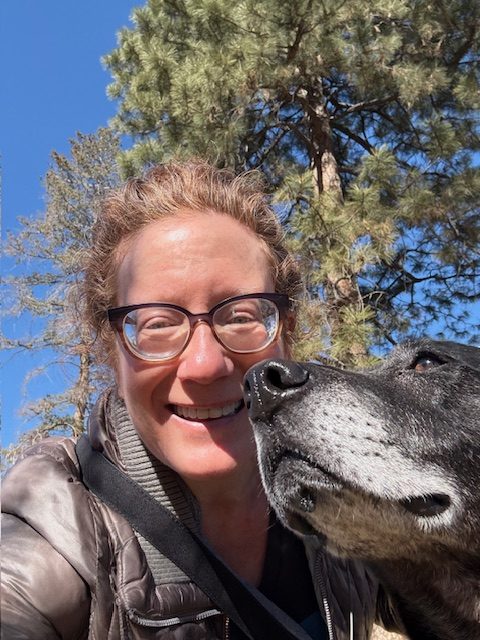
The truth is, I could call my daughter or sister or a good friend for an evening check in, and my dogs will greet me with much gusto when I get home. It’s not really about whether I have someone to do an evening check in call with or someone to be glad I’m home—it’s about not having Tom.
It’s always about not having Tom. I know I may again have a partner who I talk to every night when I’m away and who greets me with a great hug upon my return, who makes me feels safe and loved. I hope I do. I know I will probably love that person like crazy. And Tom will still be gone and that will still hurt.